Introduction
How to choose a website. When deciding to purchase a website—whether for a business, corporation, personal use, or organization—there are important factors that, based on my experience, I can tell you will help, and other factors that will only hinder your decision and lead you to make a choice you'll soon regret. I hope this article helps you choose the right provider and website for your needs, simply and clearly.
0. Do you need a page? What for?
A website can be viewed by anyone with a cell phone, tablet, or computer, from anywhere with just an internet connection—something that's growing daily. Do you need to take advantage of this? If so, why? Do you want to sell more? Improve your image with current customers? Save customer service staff time answering frequently asked phone questions—time that's costing you money? Definitely do it for real reasons you're pursuing, not because "it's trendy" or "others are doing it." by"Or, 'Well, my competition is right there.' Set clear and concise goals, and it will help you throughout the selection process. If you don't, I predict everything will go off the rails."
1. The supplier itself
When choosing a website provider, it's crucial to select a company with over 10 years of experience in the industry. Companies with less time in the business lack sufficient expertise, and yes, experience is essential for doing a good job. The idea that "anyone can build a website" is a myth. While someone might, it will likely be flawed due to a lack of skill. Another reason is that I see clients left disappointed with the service every day. I believe the provider's service is just as, if not more, important than the website itself. A friend of a friend, a colleague who builds a website "in their spare time," or a new provider lacking experience are usually the worst choices, often chosen for their lower price. I've seen many people lose their domains because of these poor choices. The person who created their website is no longer in the business years later, having moved abroad. They get frustrated having to start all over again with a new domain, or the "company" they were working with simply no longer exists or will cease to exist. So choose a reputable company with experience and a specific area of expertise (beware of companies that don't specialize and try to do everything). Forget about other factors like whether the company is well-known (and therefore you assume it won't disappoint, which is a mistake), or the price, and any other such variables!
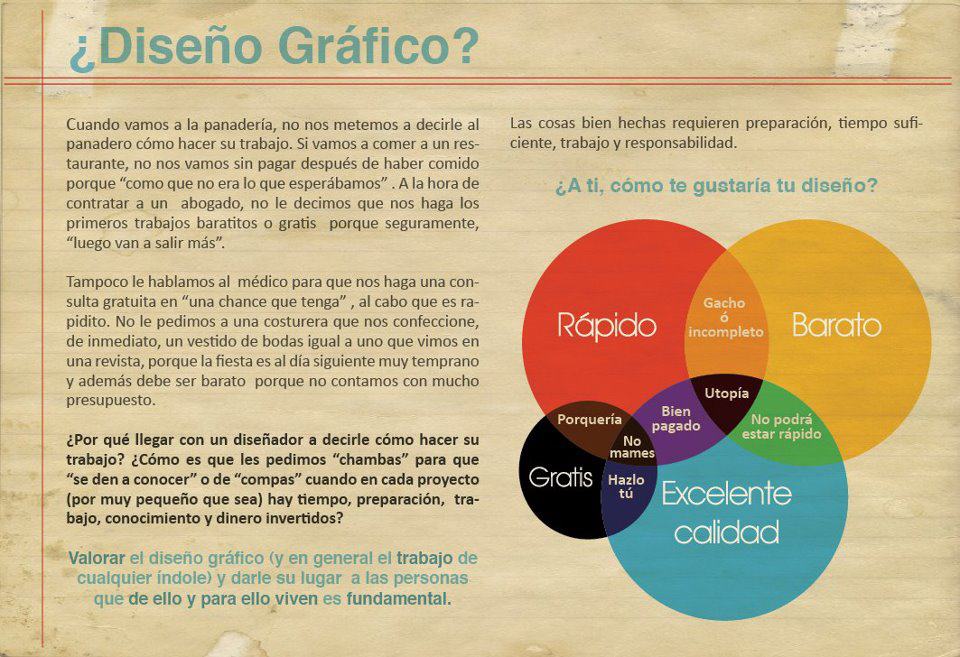
Excerpt from a blog about the graphic designer with a satire that sums up reality >
2. Price doesn't matter
Choosing the lowest price is the most common and disastrous mistake. In my experience, price shouldn't be a factor to consider when all the other important variables are met (such as provider, website features, service quality, etc.). Those who have chosen a website based solely on price have either received poor service, the service has simply stopped altogether, or the provider disappears. Analyze carefully and compare variables, experience, and price. It's not the same if provider A, who has been doing this for a year, quotes you $3 as if provider B, who has been doing this for 15 years, quotes you $4. Most likely, the first provider doesn't realize they'll lose money or won't be able to deliver the service you need, at the right price, etc. Don't choose purely based on price; it will backfire on you very soon.
 3. The quality of service is as important as the website.
Investigating service quality in terms of response times for various problems or situations, the way the service is received, and customer reviews or testimonials are key to avoiding getting stuck with a provider who "sells bread" but provides poor service. This means they're only interested in adding another number to their client list and don't care about the actual customer. Look for a provider with a Service Level Agreement (SLA) or service contract that guarantees response times for different types of situations and includes penalties for non-compliance. In my experience, I can assure you that providers who "sell bread" or are high-volume website developers make the sale, pay their salesperson's commission, and then don't really care about what comes next. Beware of these commission-based sellers on websites; they're more like the "Mary Kay" of websites. They only want their commission and don't want to provide a solution, and this usually means poor service later on, so this is a red flag (although it doesn't necessarily mean they provide bad service). Thoroughly investigate the quality of their service, including: response times, the types of problems they can help with, and who can give you references (both good and bad) about this provider.
4. Features for your website
To a certain extent, your opinion doesn't matter. Your perspective is very good on WHAT to show, since you're the one who knows best what your potential clients or website audience ask most often, but don't think you're the expert on communication or HOW to present it; here, your audience wins. Forget that you saw something you loved on Ferrari's website; you don't sell Ferraris, and your target audience probably won't buy them either. Focus on the functionality you require: obviously, there are so many options available—a blog, a forum, a feature that dances and sings when you log in and someone calls you, etc. Here's my advice: only include what you consider necessary TODAY. You can add other things later as your perspective changes. Don't fool yourself, people don't visit commercial websites (that sell websites or services) to listen to music, watch an animated intro you came up with, or think looks cool. People come looking for a product, a service, a solution, and to see all the possible features and advantages that will help them decide if it's what they need. First, you have to decide: A. Who your website is for. B. What those people want to see (and what they don't). C. Nobody wants fluff, distractions, or an animated intro, since that wastes time, and there's probably another site that's simple and to the point, so they'll go there. Rely on experts for the HOW and some of the WHAT; provide your information and expert perspective in your field, and leave everything else out.
5. Your website platform and technology
This point relates to the previous one: do you really need a self-managed platform for your website? This will depend on your situation. If you manufacture gears for the automotive industry, and this hasn't changed in 50 years, and you're not looking for new clients because you already have your customer base, but rather you simply want an online presence, then the platform doesn't matter; the other variables described in this document become more important. In any other case, if you are looking for new clients via the internet, need to make changes to your website—perhaps refreshing it every few years, adding or removing products, etc.—then the platform or technology your site is built on matters. Some important points regarding this variable are: Is the platform web-based? (Hopefully so!) Does it allow you to self-manage everything? (Some content management systems only allow certain parts.) Are you locked into a specific version? (Be careful; some installers install version XY, and you can no longer fix any bugs it contains. Make sure you can get constant, free updates.) Do you have unlimited warranties on the platform? (If something goes wrong, do they fix it for free? Who is responsible for this guarantee, since if you used WordPress, Joomla!, Drupal, or others, these are developed by third parties where there are no guarantees in case of bugs or programming errors?) Another question is, is it modular? That way you can scale to new features in the future without much trouble and without having to start over.
 6. The website seller
Try asking the salesperson the right questions to see if they're just after their commission (they're a commission-based salesperson) or genuinely want to help you. This isn't to diminish the art of selling, but a salesperson might say anything to get you to buy, regardless of whether they'll deliver on their promises once you've dealt with who they actually work for. How long have they been with the company? Will they be able to help you with everything they promised after you've purchased the product? Can they provide it in writing? These are some key questions. Bad signs from a salesperson include: trying to rush or pressure you into buying because the "promotion is about to expire" or because "you're missing out on something great." Only you can decide when to buy; if someone is pressuring you, it's a bad sign. Your responsibility with a salesperson also includes being clear and honest. Never be afraid to be so, as it will save you a lot of trouble. For example, if you no longer want a salesperson to call you, tell them you're not interested in buying from them. Or, if you've already bought from someone else, let them know; otherwise, they might keep trying to contact you. If you want the opposite, like for them to call you back in 7 days, or in a month, or in a year, tell them confidently. If the salesperson is worth it, they'll schedule it and call you back religiously when you request it—this is definitely a good sign. Be direct and honest with the salesperson. Ask them directly if they work on commission, what other activities they do, how well they really know the product, etc.
7. The skill of the people in charge of your project
One variable that almost no one considers is who is in charge of carrying out your project once you've acquired it. Will it be in the right hands? Is the person prepared, with relevant experience and qualifications? Ask these questions and find out who is involved in your project, from information gathering and project creation to ongoing support. For example, it's not good to triangulate with different people: you give your requirements to person X, but that person then has to explain them to person Y for them to be implemented. Triangulation risks creating a "telephone game." Another common mistake with vendors is assigning interns to your project or having a technician do graphic design. If you suspect a lack of skills or capabilities, or if you're unsure about this aspect, it's best to investigate thoroughly or choose someone with experience.
8. So what needs to be left aside?
Virtually everything else is different. It's believed that 70% of any consumer's purchasing decision is driven by the emotions the product, brand, salesperson, etc., evokes. Your job is to set aside emotions and subjective variables (whether you found the salesperson attractive, whether their personality is appealing, whether the brand feels "prestigious," whether they're raffling off an iPod, whether you're helping the salesperson out, etc.) and list the variables that truly matter to your goal (selling more, launching the project faster, providing consistent updates, etc.), and then make an objective decision. If this is difficult for you, create a table in a spreadsheet or on a sheet of paper with the variables that will help you achieve your website's objectives and provide honest ratings in each category. This will help you be objective and prevent emotions from leading you to buy the wrong thing.
9. How do I start?
Make a list of your website's objectives, research different providers through various channels, and compare them objectively (some online, some in directories, and others by asking friends and family for recommendations). With your goals clearly defined and provider options in hand, all that's left is to make an objective choice, as I recommend in this article.
Conclusion
Every case will be different. I'm sharing my experience, and I hope it helps you choose your website objectively. You'll avoid disappointments and frustrations, and most importantly, your website will be successful in achieving its objectives, regardless of the feelings or emotions associated with buying a commercial product.
We listen to you
Those who have trusted us