Business Email Service for Electronic Invoicing makes the difference between "we send the CFDI when we can" and "the invoice always arrives, with proof of payment and on time." Therefore, if your business sends XML/PDF invoices via email (collections, confirmations, credit notes, account statements), email ceases to be a minor detail and becomes an integral part of the revenue cycle. Furthermore, when the channel is stable, the team reduces resending, avoids complaints, and consequently maintains traceability.
Business Email Service for Electronic Billing: Why Email Supports the Billing Cycle
In invoicing, time matters. If the client doesn't receive the CFDI (electronic invoice), validation is delayed, payment is delayed, and calls and clarifications multiply. Consequently, unreliable email isn't just annoying; it costs money.
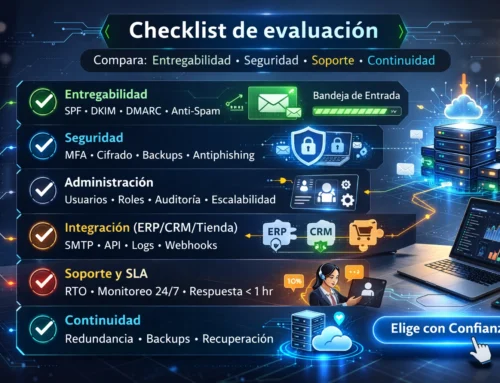
However, the most common problem isn't that the billing system fails to generate the CFDI (electronic invoice), but rather that the email service experiences intermittent issues: bounces, spam, blocked attachments, or sending limits. Therefore, an email service for electronic invoicing must guarantee three things: secure sending , reliable delivery , and diagnostics with supporting evidence.
If you want to understand how email is evaluated when used in administrative and ERP processes, you can refer to this internal content: email provider for enterprise ERP . Although invoicing is the focus, the operational criteria are the same.
Business Email Service for Electronic Billing: Correct Sender Design and Continuity
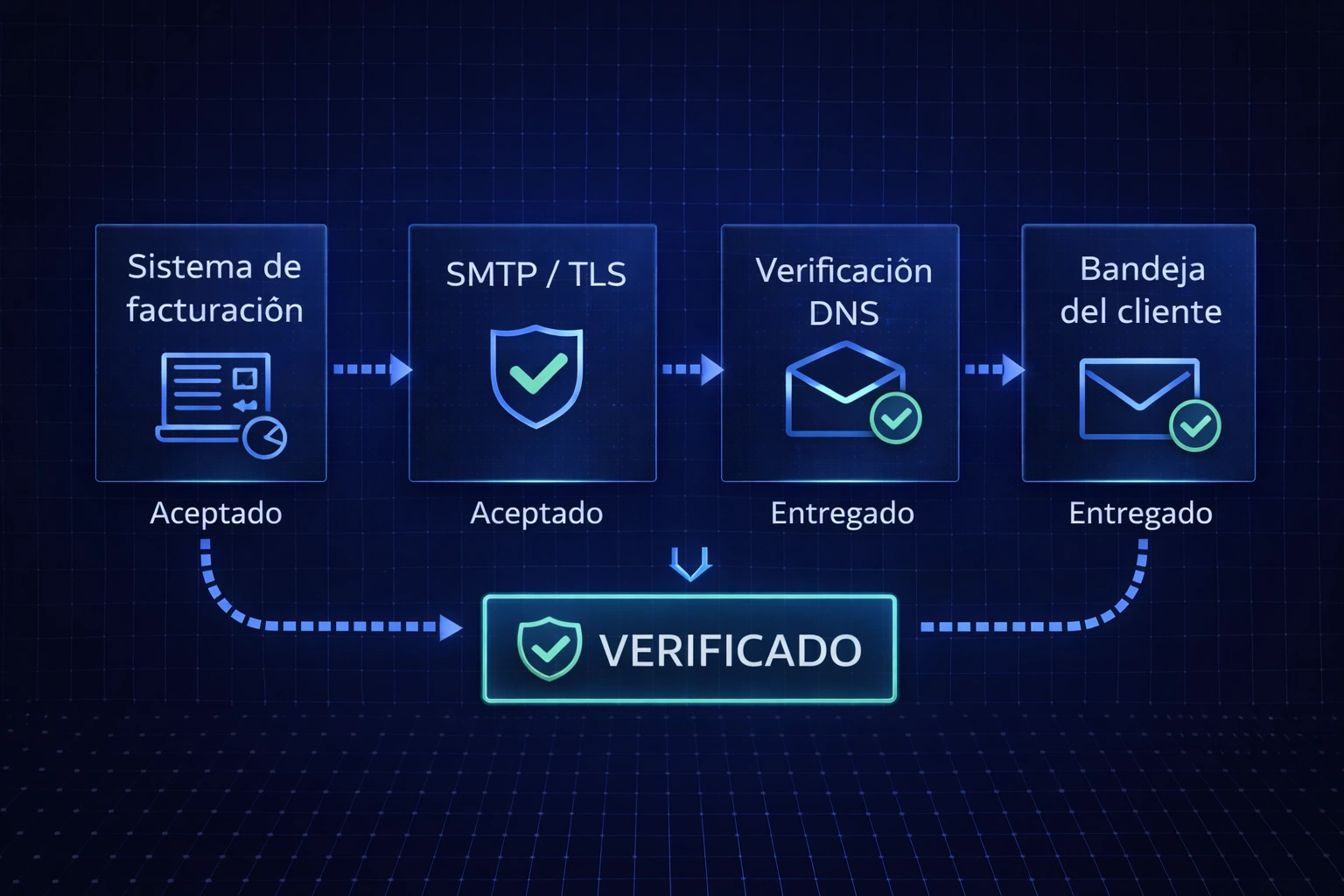
From system to customer without bounces
For billing purposes, it's best to avoid using improvised senders. Therefore, define senders by role, for example: billing@ , collections@, or receipts@ . This way, the client recognizes the origin, the department controls the flow, and, moreover, the reputation stabilizes over time.
It's also advisable to separate "system email" from the team's personal email. In other words, the billing system sends emails from a controlled sender with managed credentials, while users manage their daily email without accessing the CFDI (electronic invoice) issuance channel. Consequently, changing your password or switching computers won't interrupt invoice delivery.
If you want to take advantage of pre-packaged service options with support, check out our business email server plans . And if you prefer to start directly with implementation, here: 👉 We'll get your email ready to go.
Business Email Service for Electronic Billing: SMTP with TLS to avoid rejections and blocks
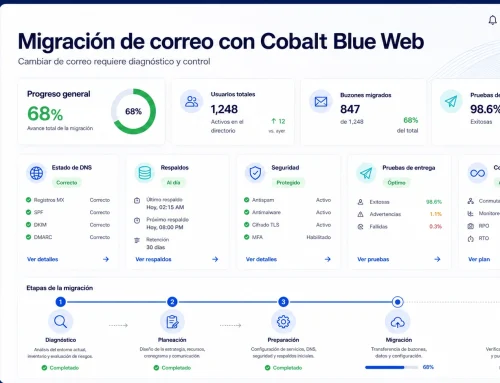
The first technical step is the outbound channel. Therefore, the service must offer authenticated and encrypted SMTP (TLS). In fact, a large proportion of "unusual" bounces are explained by: blocked ports, poorly negotiated TLS, or uncontrolled credential rotation.
In real-world operations, it's advisable to standardize transmission over a common port in enterprise environments (for example, 587 with STARTTLS) because this reduces friction with firewalls. Furthermore, TLS is not just for show: many receivers enforce stricter policies and reject insecure connections. Consequently, without proper TLS implementation, delivery becomes inconsistent.
Therefore, a serious service validates the TLS handshake, confirms a valid certificate, and tests real transmissions, not just "connectivity".
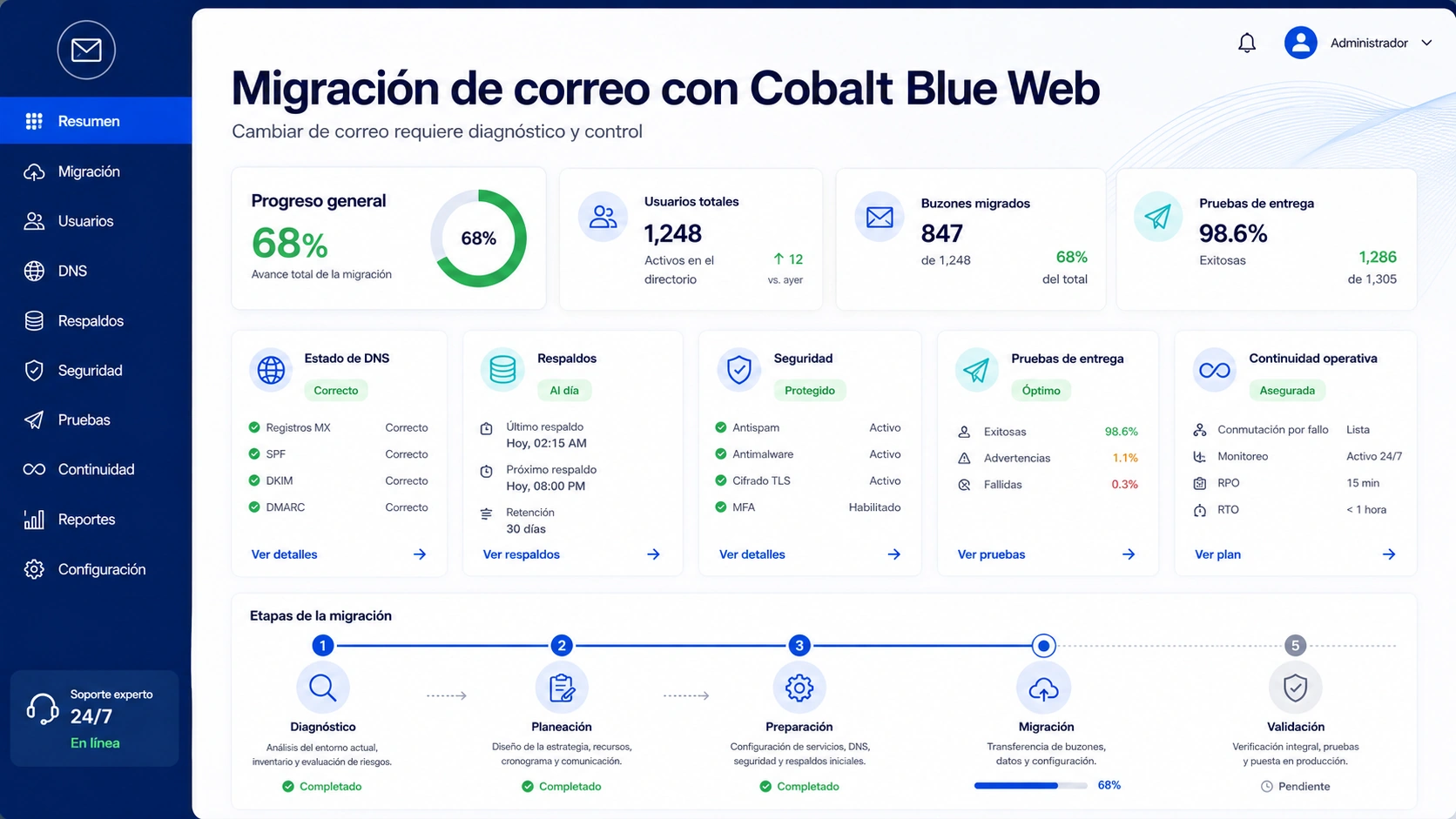
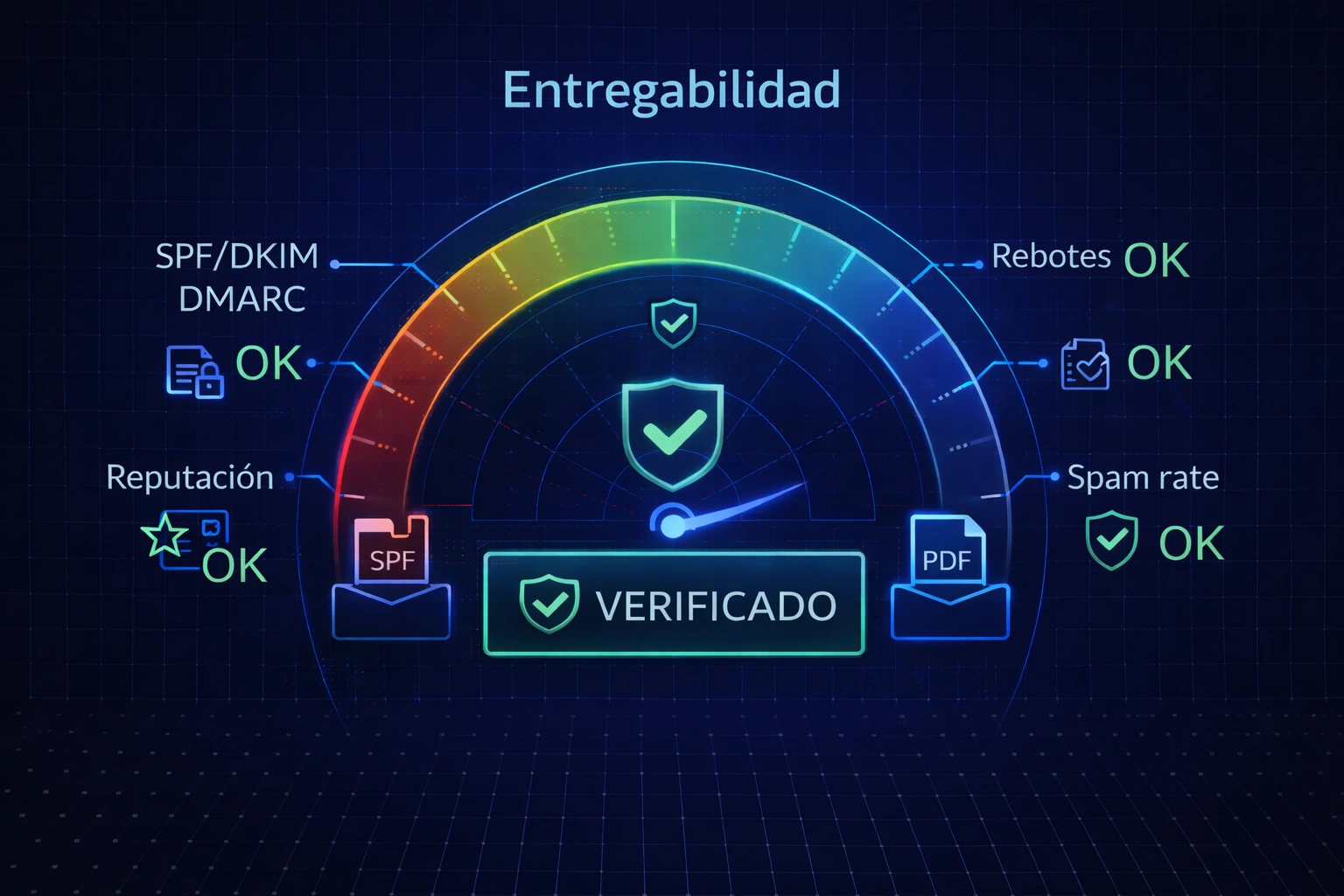
Business Email Service for Electronic Billing: SPF, DKIM and DMARC for CFDI deliverability
This is the crucial point that determines whether the email arrives or not. Even if the email is sent, the recipient decides whether to accept it, mark it as spam, or reject it. Therefore, DNS authentication is essential for reliable deliverability.
-
SPF authorizes issuing servers; this reduces rejections due to unauthorized origin.
-
DKIM signs the message; therefore, the receiver validates its integrity.
-
DMARC aligns visible domain and defines policy; it also provides reports.
In electronic invoicing, DMARC is especially useful because it gives you visibility: you can see if someone is trying to impersonate your domain, and consequently, prevent your reputation from being ruined by fraudulent submissions. Furthermore, by aligning SPF/DKIM with the "From" field, you reduce the risk of the CFDI ending up in spam.
For this reason, the service must validate not only published records, but also results in actual delivery headers.
Business Email Service for Electronic Billing: XML/PDF attachments and proof that accurately represent your transaction
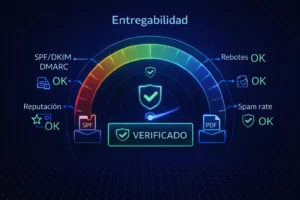
Detects bounces and spam
Sending CFDI (electronic invoices) involves attachments. Therefore, it's essential to validate limits and filters before proceeding. Without testing, the typical scenario occurs: small emails arrive, but when a real XML/PDF is attached, the message bounces, is blocked, or is degraded.
At this point, it's worth trying:
-
actual sizes (including invoices with addenda or large PDFs),
-
actual recipients (Gmail, Outlook, and corporate emails),
-
and evidence (headers and SMTP codes), to find out what happened.
Furthermore, it's important to pay attention to the subject line and content of the message. Not because "the text is marketing," but because some filters penalize patterns. Consequently, a clean, consistent format with a stable sender is best, especially for billing purposes.
If your administrative system integrates email for various processes (not just invoicing), this guide complements the picture: Corporate Email Integrable with Administrative Software . This is how you connect the logic: secure sending, authentication, and continuity.
Business Email Service for Electronic Billing: queue monitoring and alerts to keep you informed early
In billing, late notifications are costly. Therefore, monitoring queues, bounces, and alerts is essential. If a queue grows, there's a block. If bounces increase, there's a reputation or DNS issue. If DKIM/SPF alerts appear, there's been an uncontrolled change.
Furthermore, monitoring protects reputation. In other words, if you detect an increase in complaints or bounces, you can correct the issue before the domain is flagged. Consequently, CFDI delivery remains stable over time.
👉 Leave your email in the hands of experts , because that way, the day-to-day is sustained with clear diagnoses and timelines.
Business Email Service for Electronic Billing: what support should include when there are bounces
When a customer says “I didn’t receive it,” the correct response isn’t “resend it.” Instead, support should look for evidence: bounce code, full headers, and, where applicable, server logs. Therefore, the correct service is the one that can say:
-
If the message left the server,
-
if the recipient accepted it,
-
and whether there was rejection due to politics or reputation.
Consequently, the problem is solved at its root and does not repeat itself every week.
For a reference on "what to expect" from a service with a real support focus, you can review: Business email with real support: 2025 prices . Use it as a checklist of expectations: support, response times, and scope.
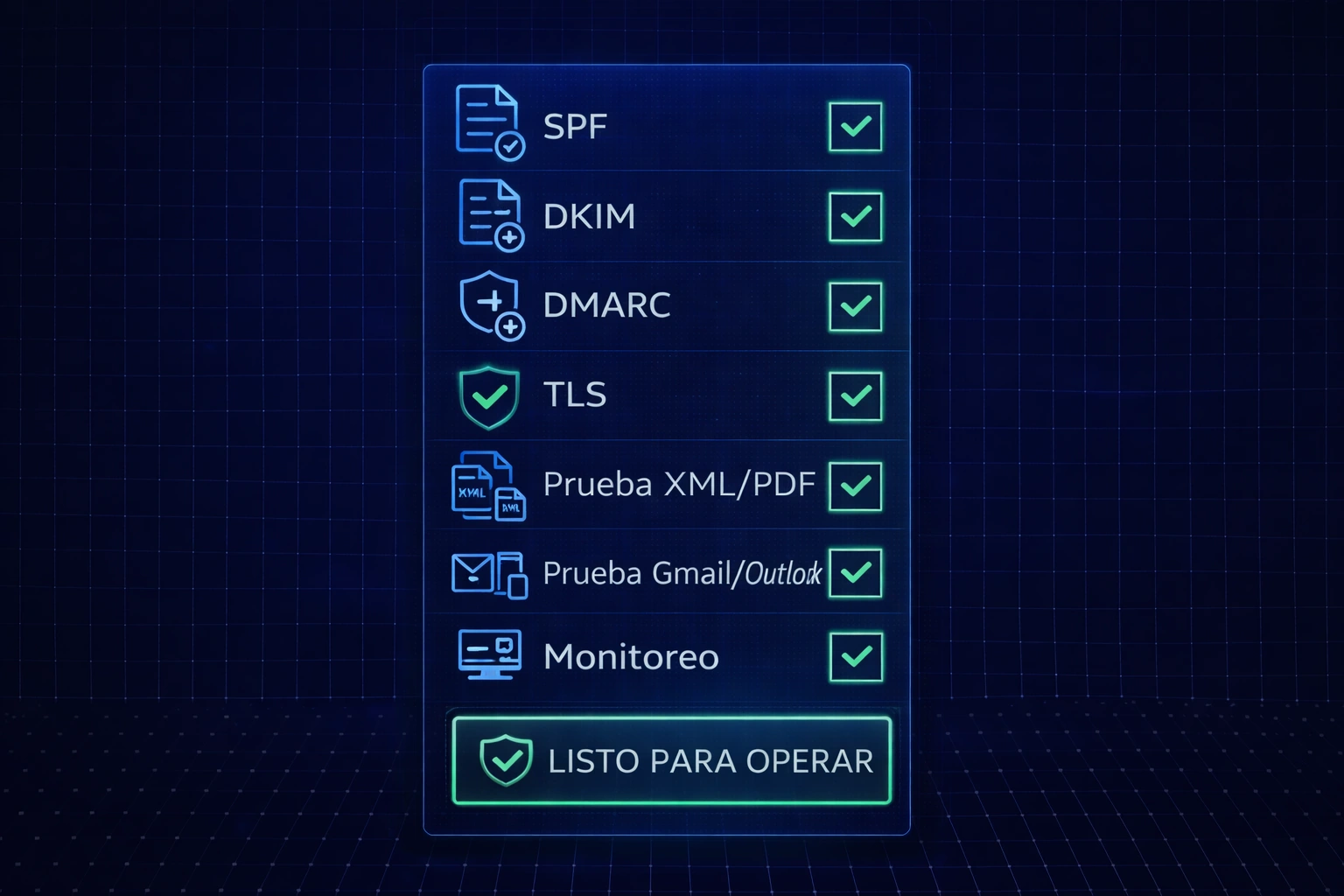
Business Email Service for Electronic Billing: Production Launch Checklist
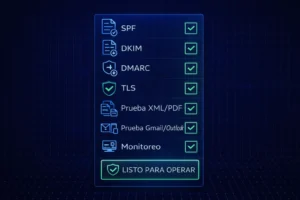
Tests that prevent surprises
Before releasing, a short but impactful checklist is advisable:
-
Correct SPF and no duplicates.
-
DKIM active and verified in headers.
-
DMARC monitoring and reporting are working.
-
SMTP with validated TLS and standard port enabled.
-
Sender by defined role (billing/collection) with responsible party.
-
Tests with real XML/PDF and typical sizes.
-
Tests on Gmail/Outlook/corporate accounts with evidence.
-
Active queue monitoring, bounces, and alerts.
-
Change log (what, when, who).
If you want this checklist to be implemented with you and remain operational with comprehensive support: 👉 Complete Solution: Email + Support.
Business Email Service for Electronic Billing: quick decision without improvisation
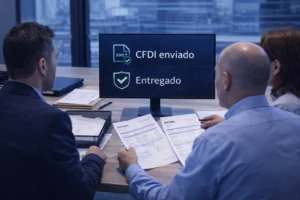
Documents and timely follow-up
If your billing is critical, your provider needs to be predictable. Therefore, choose based on criteria such as TLS, DNS authentication, monitoring, and evidence-based support. This will reduce the actual cost by minimizing rework and stabilizing billing.
To conclude with an actionable step focused on your case: 👉 Talk to a Business Email Specialist.
FAQs: Frequently Asked Questions
Why do I need a Business Email Service for Electronic Billing if I already have email?
Because in billing, stable delivery and diagnostics are crucial. That means SMTP with TLS, SPF/DKIM/DMARC, and evidence-based support when bounces occur.
What is the most common thing to do when the CFDI (electronic invoice) does not arrive by email?
Misaligned DNS authentication, degraded reputation, blocked attachments, or size limits. That's why it's best to test with real XML/PDF files and check the headers.
Are SPF and DKIM sufficient for billing?
They help, although DMARC adds alignment and reporting. Consequently, DMARC allows you to control reputation and detect impersonation.
How do I know if the email went to spam?
This is confirmed by checking the destination mailbox and analyzing headers. Additionally, authentication and reputation are reviewed to correct the underlying issue.
Which sender is best to use for sending invoices?
One sender per role (billing@ or receipts@) with credential control and responsible party. This ensures continuity and a consistent reputation.
What should I monitor so I don't find out too late?
Queues, bounces, authentication alerts, and submission trends. Therefore, you can correct issues before the customer complains.
Why can a DNS change affect CFDI delivery?
Because SPF/DKIM/DMARC reside in DNS. Consequently, an uncontrolled change breaks authentication and degrades deliverability.
What evidence should the support provide when there is a bounce?
SMTP code, full headers, and, where applicable, server logs. This makes the diagnosis verifiable and the correction documented.
When is a managed service with support appropriate?
When billing is critical, there is high volume, intermittent service, or sensitive attachments, managed service reduces risk and speeds up resolution.
 We provide the service you need, click here